
When Your LCD Goes End-of-Life: Finding a Replacement
An EOL notice on a display is not a purchasing problem, it is a re-qualification problem. The fastest route is to define the replacement by what your product actually constrains - outline, active area, interface, driver IC behaviour and connector - and treat everything else as negotiable. Most 'impossible to replace' panels turn out to be replaceable once that list is separated from the original datasheet.
Written by the Junxian applications engineering team. Figures quoted for “our models” are calculated from the 103 models on this site that carry a full parameter set, so they change when the catalogue changes.
Why display modules go end-of-life
Rarely because the module maker wants them to. Glass is made in campaigns on lines that get retooled for higher-volume sizes; a driver IC goes out of production; a backlight or polariser source changes. Consumer product cycles run two to three years, industrial products run ten or more, and the gap between those two facts is where EOL notices come from.
The five parameters that usually cannot move
Outline dimension - the module must fit the existing opening and mounting. Active area and its position - the visible window and the bezel print have to line up. Interface and signal levels - or it is a board change. Driver IC command set - or it is a firmware change, though often a small one. Connector type and pin order - or it is a cable change, which is usually the cheapest of the five to accept. Give us these and the search becomes concrete.
What is usually negotiable
Brightness (often improved), viewing direction (sometimes improved), backlight colour on monochrome parts, operating temperature (usually can be widened), contrast, and cosmetic details. Buyers frequently insist on matching the original datasheet line for line and end up rejecting a part that would have been an upgrade. Rank your parameters before you compare candidates.
Where the replacement search has room to move
It helps to know how deep the alternatives are at your size before you start. This is our published range broken down by size, resolution and interface: the sizes with several entries are the ones where a replacement can usually be found without touching your mechanics, and the single-entry sizes are the ones to raise with us early.
| Size | Models published | Resolutions available | Interfaces available |
|---|---|---|---|
| 0.49" | 1 | 64×32 | MCU / 8080 / 6800 parallel |
| 0.96" | 4 | 128×64, 80×160 | I²C, MCU / 8080 / 6800 parallel, SPI |
| 1.14" | 1 | 135×240 | MCU / 8080 / 6800 parallel |
| 1.28" | 1 | 240×240 | RGB parallel |
| 1.3" | 4 | 128×64, 240×240 | MCU / 8080 / 6800 parallel, RGB parallel, SPI |
| 1.46" | 1 | 128×128 | MCU / 8080 / 6800 parallel |
| 1.5" | 1 | 128×32 | SPI |
| 1.54" | 2 | 128×64 | I²C, MCU / 8080 / 6800 parallel, SPI |
| 1.77" | 4 | 128×160 | MCU / 8080 / 6800 parallel, SPI |
| 2" | 3 | 192×64, 240×320 | MCU / 8080 / 6800 parallel, SPI |
| 2.4" | 5 | 240×320 | MCU / 8080 / 6800 parallel, SPI |
| 2.42" | 1 | 128×64 | MCU / 8080 / 6800 parallel |
| 2.5" | 1 | 160×96 | SPI |
| 2.8" | 4 | 240×320, 320×240 | MCU / 8080 / 6800 parallel, RGB parallel, UART serial |
| 2.9" | 2 | 240×128, 240×160 | MCU / 8080 / 6800 parallel, SPI |
| 3" | 4 | 128×64, 160×160, 360×640 | MCU / 8080 / 6800 parallel, MIPI DSI, RGB parallel, SPI |
| 3.2" | 4 | 128×64, 20×4, 240×320 | MCU / 8080 / 6800 parallel, SPI |
| 3.4" | 1 | 480×272 | RGB parallel |
| 3.5" | 5 | 240×320, 320×240, 320×480 | MCU / 8080 / 6800 parallel, RGB parallel, UART serial |
| 3.8" | 1 | 128×64 | - |
| 4" | 1 | 480×800 | RGB parallel |
| 4.3" | 7 | 192×64, 480×272, 800×480 | RGB parallel, UART serial |
| 4.45" | 1 | 480×854 | MIPI DSI |
| 5" | 6 | 240×128, 480×272, 480×854, 800×480 | MCU / 8080 / 6800 parallel, MIPI DSI, RGB parallel |
| 5.2" | 1 | 240×128 | - |
| 5.7" | 1 | 320×240 | - |
| 7" | 13 | 1024×600, 800×480 | HDMI, MIPI DSI, RGB parallel |
| 9" | 1 | 1024×600 | RGB parallel |
| 10.1" | 4 | 1024×600, 800×1280 | MIPI DSI, RGB parallel |
| 15.6" | 1 | 1920×1080 | - |
A size with several models and several interfaces is a size where a replacement search has room to move. One with a single entry usually means the outline has to match exactly - tell us early if that is your case.
How to run the replacement quickly
Send the original datasheet or a clear photo of the module including any markings, plus the outline drawing and which of the five fixed parameters are truly fixed. We come back with candidates and say honestly where each one differs - a candidate with a known difference you can test is worth more than a claimed exact match that turns out not to be. Then take samples (5 pcs) and re-qualify before committing.
Reducing the risk next time
Three habits help. Choose an interface with more than one panel option in the size you need, so a second source exists. Ask about expected availability before design-in rather than after - we will tell you where a part is tied to a glass source we do not control. And keep the display definition in your own documentation as a parameter list, not as a supplier part number, so the next search starts from requirements rather than archaeology.
What we can commit to
We build 188 models across 33 sizes and develop around 120 new ones a year, with in-house sampling. That means a replacement search usually starts inside our own range, and where it does not, we say so rather than proposing something that nearly fits. We do not promise indefinite availability of any panel - nobody honestly can - but we will tell you what a part depends on before you design it in.
Long-life monochrome models buyers most often need to replace
Published models that illustrate the point above - full specifications on each page.
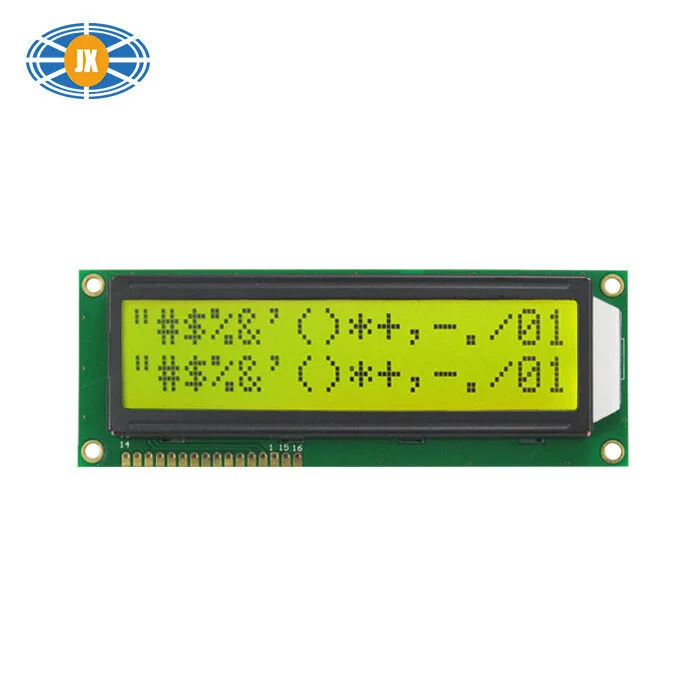
LCD 16x2 Alphanumeric Display 16 PIN Flexible LCD Modules With Multi C
JM1602M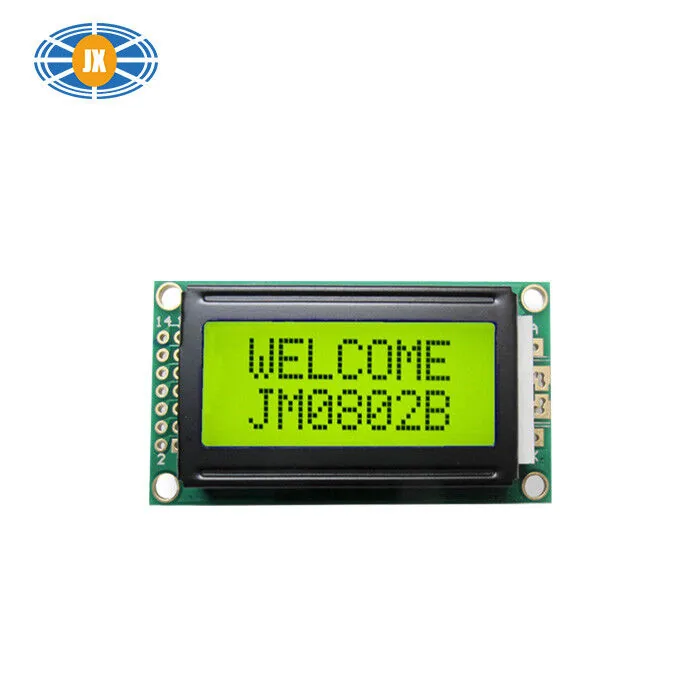
8x2 Character LCD Module ST7066 Blue Monochrome LCD Display Multiple S
JM0802B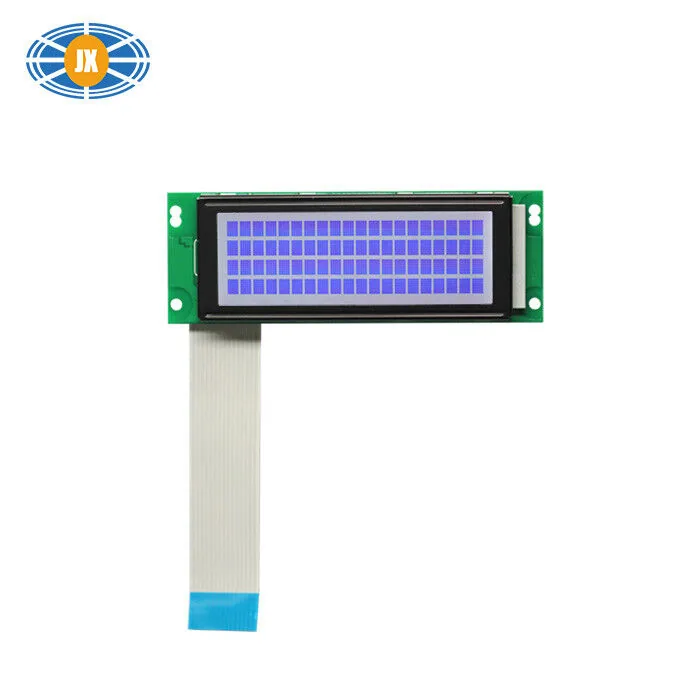
3.2 Inch Character LCD Modules High Contrast LCD Display 100cd/m2 With
JM-2004C-00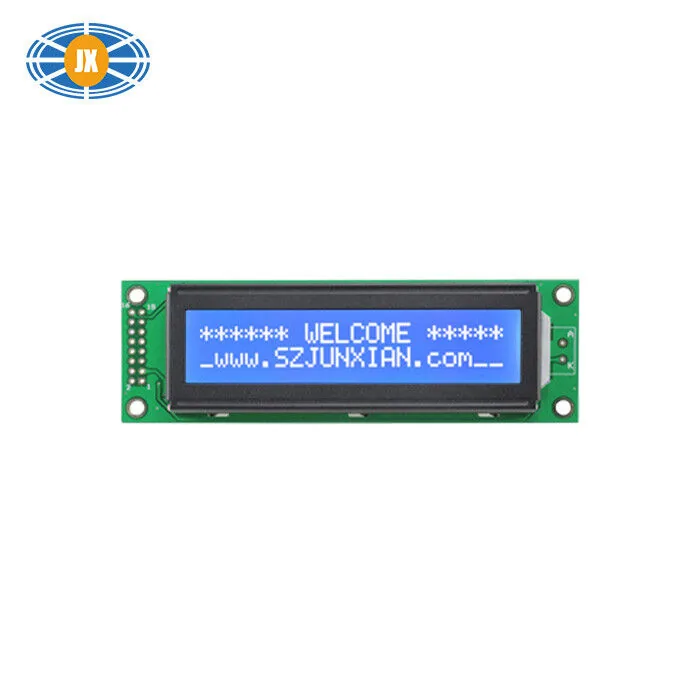
Custom 20x2 Character LCD Modules Blue Yellow Green Display With I2C/S
JM2002ARelated guides
How a Custom LCD Module Is Developed, Step by Step
Most 'custom' display projects are not custom glass at all - they are an existing panel with a different FPC, connector, backlight...
LCD Module MOQ, Lead Time and Sample Policy
Samples 5 pcs. Catalogue models 100 pcs. Fully custom tooled glass 1,000 pcs. Production lead time 10-20 days, samples 10-15 days....
How Many Nits Does a Sunlight-Readable Display Need?
Short answer: 200-300 cd/m² indoors, 350-450 cd/m² for shaded outdoor or a window-lit factory, and 500 cd/m² or more - or a transf...
Questions engineers ask us about this
Can you find a replacement for a discontinued LCD?
Often, yes. Send the original datasheet or photos with markings, the outline drawing, and which parameters are genuinely fixed. We will name candidates and state where each differs from the original rather than claiming an exact match.
What information do you need to match an existing display?
Outline dimension, active area and its position, interface and signal levels, driver IC, connector type and pin order. Resolution and size alone are not enough to identify a module.
Will a replacement need firmware changes?
Sometimes a small one, if the driver IC differs. Initialisation sequences are the usual difference and are typically a contained change. We flag it up front when it applies rather than letting your team discover it on the bench.
Can you guarantee long-term availability?
No supplier can honestly guarantee a panel forever. What we can do is tell you what a specific part depends on, flag the ones tied to a source we do not control, and give notice rather than silence when something changes.
Do you support low-volume legacy production?
Within reason - 100 pcs is the catalogue minimum and legacy support is one of the reasons that number is not higher. Tell us the annual quantity and we will say plainly whether it works.
Need a quote or a datasheet?
Send us size, resolution, interface and annual quantity. Our engineers reply within one working day. Sample MOQ 5 pcs, lead time 10-20 days.