
Custom LCD display development
Roughly 120 new display modules a year leave this factory, and most of them start as a customer drawing rather than a catalogue item. This page explains exactly what we can change, what it costs you in time and tooling, and what we need from you to quote.
Four levels of customisation
Most projects only need level 1 or 2. Knowing which level you are in tells you immediately whether tooling and long lead times are involved.
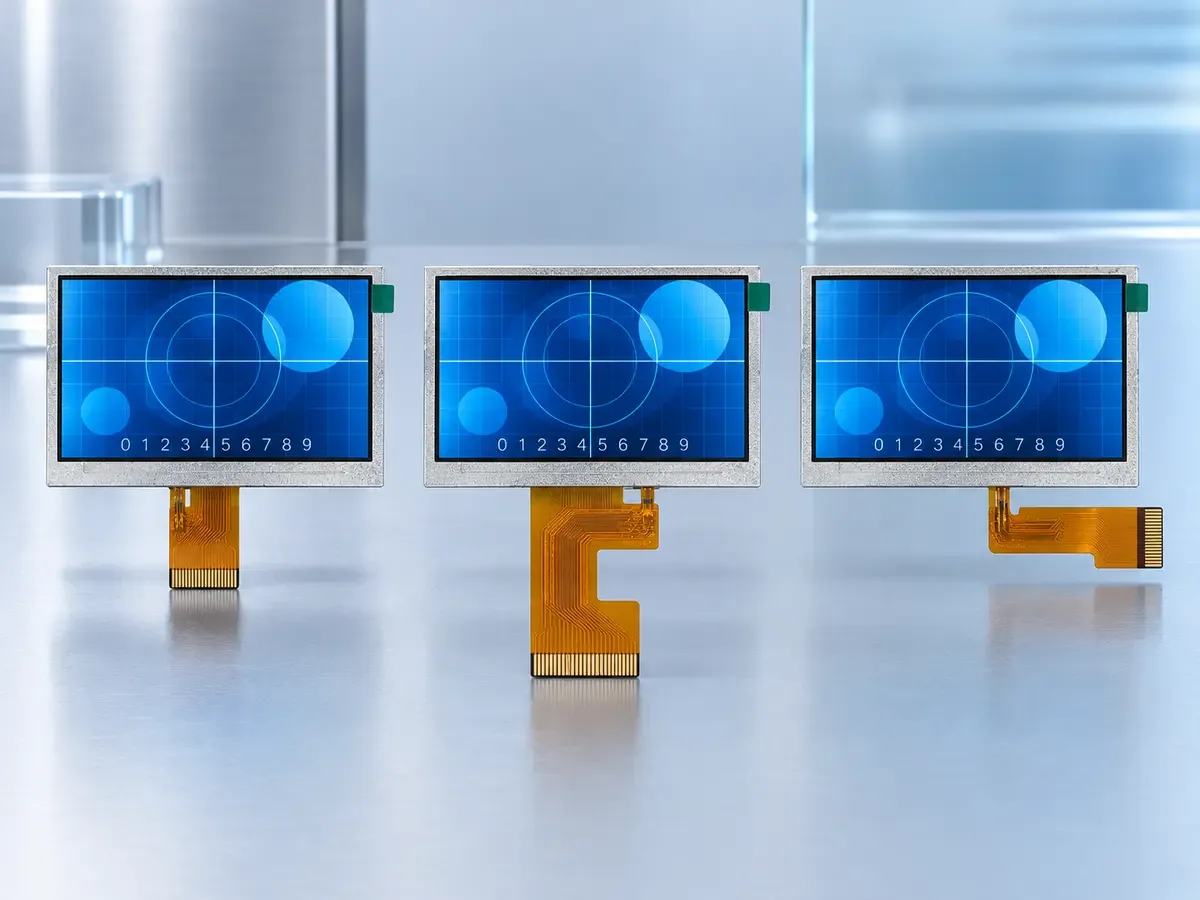
Level 1 · Cable and connector
FPC length, pin order, connector model, cable exit direction. No glass tooling, no new drawings from scratch - the fastest change we make, and the most common one.
Tooling: none · adds days, not weeks
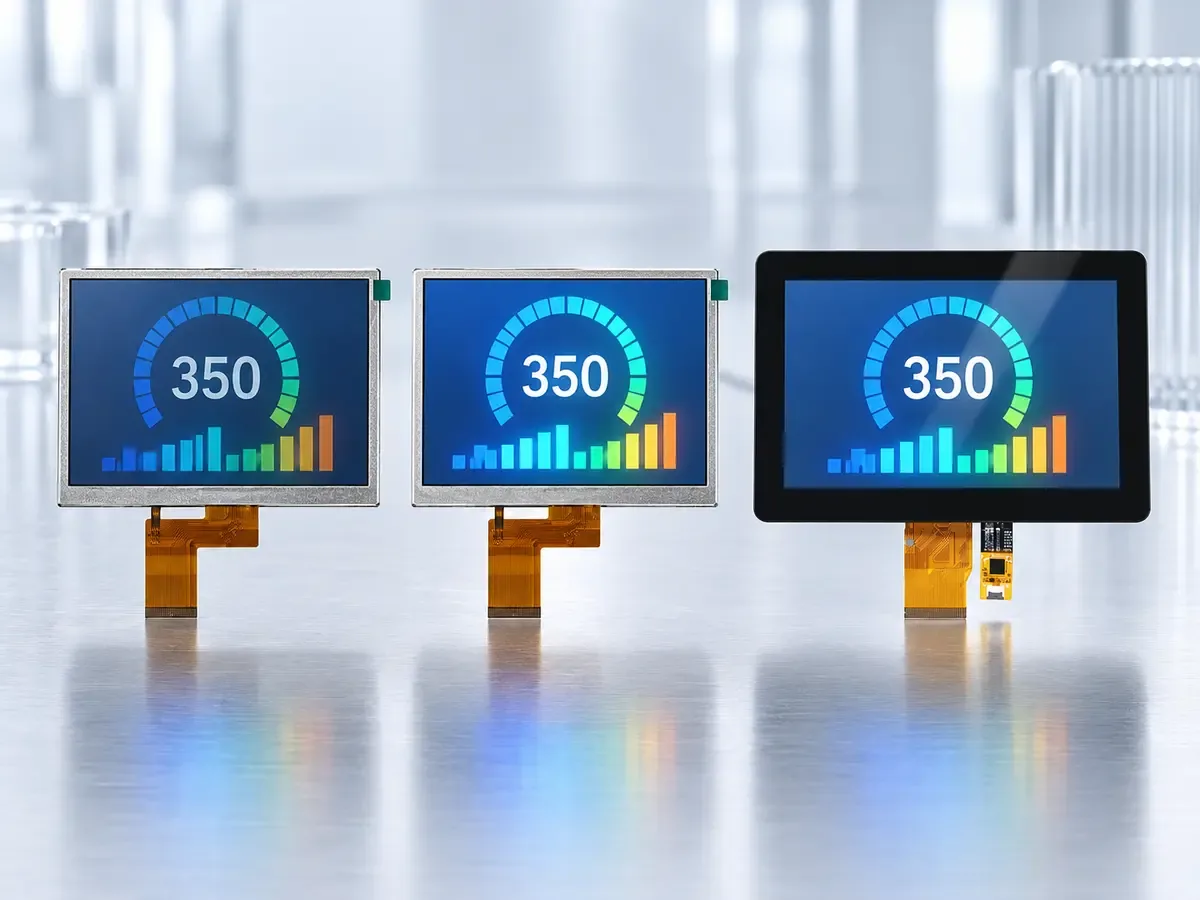
Level 2 · Optical and touch
Backlight brightness and colour temperature, polarizer mode, adding a capacitive or resistive touch panel, air-gap or optical bonding, printed cover glass with your artwork.
Tooling: cover glass only · adds 1-3 weeks
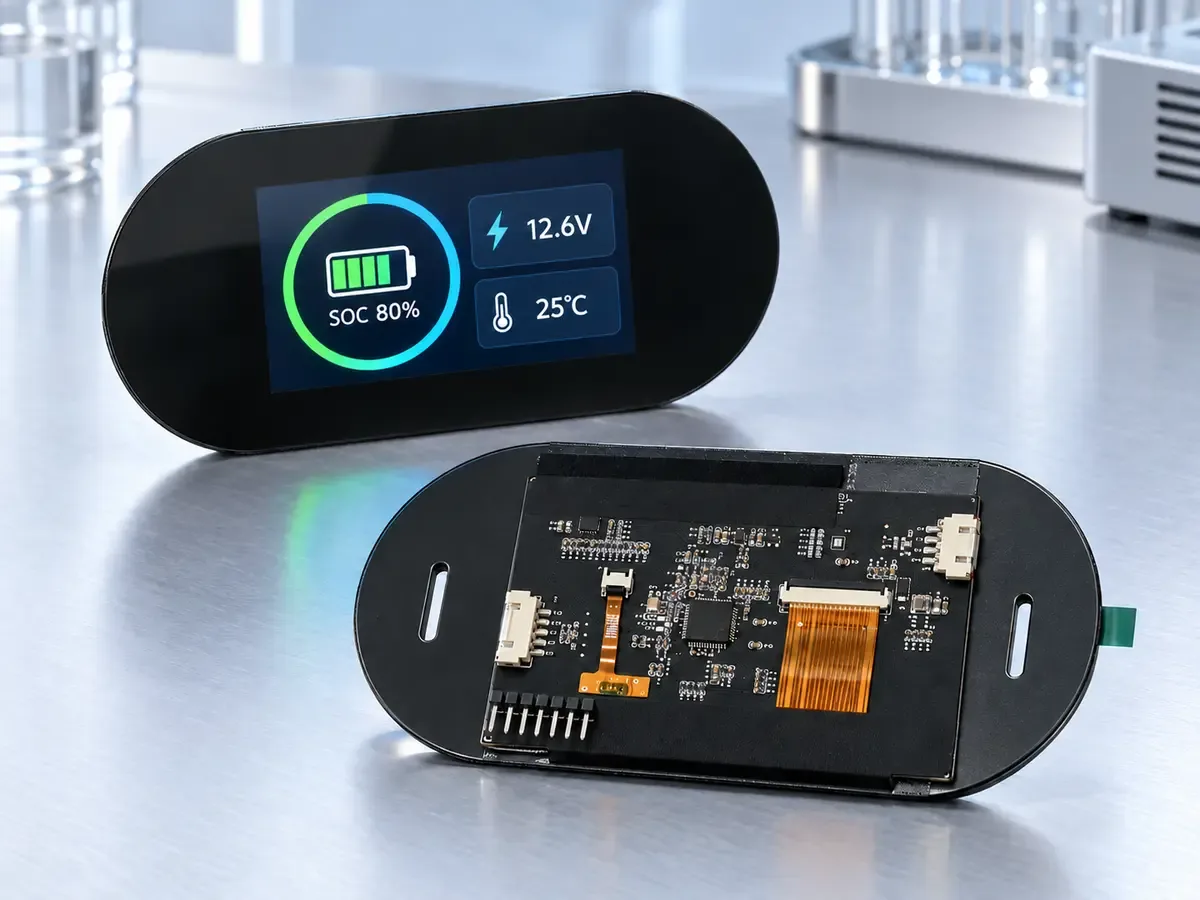
Level 3 · Electronics
Driver IC selection to match your MCU, driver board or PCBA, interface conversion, a UART command set on a smart module, firmware for a fixed UI.
Tooling: PCBA only · adds 2-4 weeks
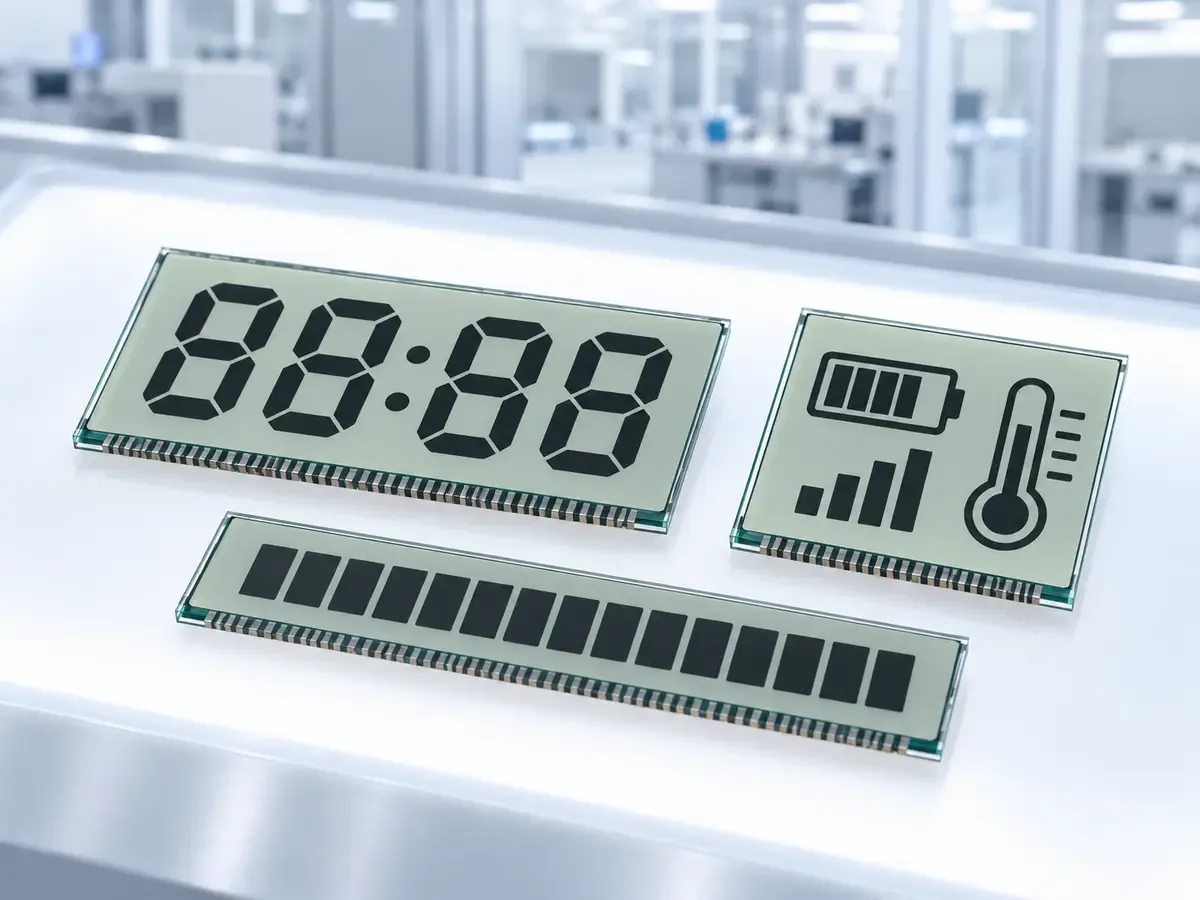
Level 4 · New glass
A new TFT outline, or fully custom segment glass drawn to your digit and icon layout. This is a new part number with its own mask - the artwork review matters more than anything else.
Tooling: yes · schedule quoted per project
What we can change, and what we cannot
Being specific about limits saves both sides a week of emails.
- 1Cover glass / touch sensorThickness, printing, bezel width, surface hardnessController tuning for gloves, water, thick cover glassOpen to change
- 2Upper polarizerTransmissive, transflective or reflective modeOpen to change
- 3LCD glass — the cell itselfNative resolution, pixel pitch, active area, glass modeA new size or resolution means new tooling and a scheduleFixed by the panel
- 4Lower polarizer / reflectorReflective and transflective builds swap this layerOpen to change
- 5Backlight — LED and light guideLED count, drive current, brightness, colour temperatureOpen to change
- 6PCBA and driver ICDriver IC within what the glass supports, UART firmwareOpen to change
- 7FPC tail and connectorLength, width, pin pitch, pin order, connector typeOpen to change
Open to change
- FPC length, width, pin pitch, pin order and connector type
- Backlight LED count, current, brightness and colour temperature
- Polarizer mode - transmissive, transflective or reflective
- Touch panel type, sensor stack, controller and firmware tuning (gloves, water, thick cover glass)
- Cover glass thickness, printing, bezel area, hardness and surface treatment
- Driver IC, within what the glass supports
- Operating temperature grade, where a wide-temperature version of the glass exists
- Segment layout, icons and digit shapes on segment products - these are drawn to your artwork
Fixed by the panel
- Native resolution and pixel pitch of an existing TFT glass
- Physical active area of an existing glass - a 7" panel cannot become 6.8" without new tooling
- Maximum brightness the backlight structure can reach without redesign
- Viewing-angle behaviour inherent to the glass mode (TN, VA or IPS)
The practical rule: if a change affects the glass itself, it needs tooling and a schedule. If it affects everything attached to the glass, it usually does not.
The development process
Requirement and feasibility
You send parameters or an application description. We come back with a specific model number or a modification plan, and flag anything that will need tooling. Normally within one working day.
Quotation
Unit price at your quantity, tooling cost stated separately, sample cost and schedule. If a cheaper standard model would do the job, we say so - it is a shorter route to a repeat order than selling you tooling you do not need.
Drawing approval
2D drawing and specification for your sign-off. For segment glass this is the critical step: once the mask is made, the layout is fixed.
Samples
10-15 days from stock glass; longer where new tooling is involved. You check dimensions, optical quality and interface timing on your own board.
Mass production
10-20 days after approval. The approved sample becomes the reference for every repeat order, so batch two matches batch one.
Repeat orders and continuity
We hold the glass and driver IC combination for running projects and notify you in writing before any change. See how we handle end-of-life.
What to send with your enquiry
Enquiries with these six items get a model number and a price. Enquiries without them get questions, which costs both of us two days.
| Item | Why it matters |
|---|---|
| Screen size and resolution | Narrows the glass to a handful of candidates immediately. |
| Interface | Decided by your processor - MCU, SPI, RGB, LVDS, MIPI or UART. |
| Brightness and environment | Indoor, workshop or outdoor changes the backlight and the price. |
| Operating temperature | Below 0 °C rules out commercial-grade glass. |
| Touch requirement | Capacitive or resistive, gloves or wet use, cover glass thickness. |
| Annual quantity | Sets the price band and whether tooling is worth amortising. |
Not sure about some of them? Send what you have. Half our projects start with “we need a screen about this size for this device”.
Also known as
Buyers outside English-speaking markets search for this service in their own language rather than a literal translation - shown here so an automatic translation of this page does not miss the match.
| German | TFT Display Hersteller (manufacturer); Sonderanfertigung context for custom |
|---|---|
| French | fabricant écran LCD; écran LCD sur mesure (custom) |
| Italian | produttore display LCD; LCD su misura (custom) |
| Polish | producent wyświetlaczy LCD; wyświetlacz LCD na zamówienie (custom) |
| Japanese | 液晶モジュール メーカー (LCD module manufacturer) |
| Portuguese / Spanish | fabricante de display / pantallas LCD; display LCD sob medida / pantallas LCD a medida (custom) |
Evidence: autocomplete-suggestion research across seven languages, 2026-09-02 - existence evidence for the terms themselves, not a search-volume ranking.
Frequently asked questions
What does customisation actually cost?
It depends on which layer you change. Changing FPC length, connector, backlight current or adding a touch panel to existing glass carries no glass tooling - you pay a modest engineering charge and the unit price. New segment glass or a new TFT outline needs tooling, quoted separately and stated in writing before you order. We do not fold tooling into the unit price to make the quote look cheaper.
What is the minimum quantity for a custom module?
1,000 pcs for fully custom modules. Modifications of catalogue models start at 100 pcs. Samples are 5 pcs in both cases.
How long does a custom project take?
Modification of an existing model: samples in 10-15 days, production 10-20 days. New glass tooling adds several weeks depending on the type - we give the specific schedule with the quote, not a generic range.
What do you need from me to start?
Screen size, resolution, interface, brightness, operating temperature, touch requirement and annual quantity. A drawing of the enclosure opening and the FPC exit direction removes most of the back-and-forth. If you only know the application, say that instead - we will propose a starting model.
Do you sign NDAs?
Yes, before any drawing exchange if you prefer. Send your template or ask for ours.
Who owns the tooling?
Tooling you pay for is dedicated to your project and is not used for other customers' orders. Put it in the purchase agreement if you want it recorded explicitly.
Send us the specification
We reply with a model number, a price and a schedule - or with the honest answer that a standard model would serve you better.