
Cover Glass and Surface Treatment: AG, AF, AR and Printing Options
The surface finish on a cover glass changes how a display reads in the real world as much as the panel underneath it does, and it is one of the most common places a customisation request starts once a buyer has already chosen a panel.
Written by the Junxian applications engineering team. Figures quoted for “our models” are calculated from the 103 models on this site that carry a full parameter set, so they change when the catalogue changes.
Why the surface finish matters as much as the glass
A cover glass with no treatment is a mirror as much as it is a window - specular reflections from overhead lighting or direct sun can wash out even a bright panel underneath. Surface treatment is a separate decision from panel brightness: a well-chosen coating can do more for real-world legibility than pushing the backlight higher, and it is nearly always cheaper.
Anti-glare, anti-reflective and anti-fingerprint compared
| Treatment | What it does | Trade-off |
|---|---|---|
| Anti-glare (AG) | A matte etched surface that diffuses reflections rather than concentrating them into a bright spot | Slightly softens image clarity compared with a glossy surface |
| Anti-reflective (AR) | A multi-layer optical coating that reduces the amount of light reflected, keeping the surface glossy and clear | Costs more than AG; less effective than AG against a single strong direct light source |
| Anti-fingerprint (AF) | An oleophobic coating that resists skin oils and makes the surface easier to wipe clean | Usually combined with AG or AR rather than used alone |
The practical rule: AG for equipment under mixed or overhead lighting where a single bright reflection is the problem; AR where image clarity has to stay high and reflections are more diffuse; AF added to either when the display is touched by bare hands.
Printing, logo windows and colour-matched bezels
Cover glass can carry printed graphics, an opaque border, a cut-out logo window, or a colour-matched bezel edge - all done on the same glass as the touch or protective layer, not as a separate part bonded on afterward. Send us the artwork and the areas that need to stay clear and we will confirm minimum feature size and registration tolerance for your specific glass thickness.
Bonding method interacts with the surface choice
How the cover glass is bonded to the panel changes what the surface treatment is actually fighting - an air-gap bonded stack has an internal reflective interface that optical bonding removes, which is why an optically bonded panel often needs less aggressive surface treatment to read well in bright light. See our bonding methods guide for the full comparison before specifying both together.
What to send us for a cover glass quote
| Outline and cutout | Dimensions, corner radius, any cutouts for buttons or sensors |
|---|---|
| Thickness | Or tell us the mechanical protection level you need and we will recommend one |
| Surface treatment | AG, AR, AF, any combination, or none |
| Printing / logo | Artwork file, and which areas must stay optically clear |
| Bonding | Air-gap or optical, to the panel this cover glass pairs with |
Touch models a cover glass change applies to
Published models that illustrate the point above - full specifications on each page.
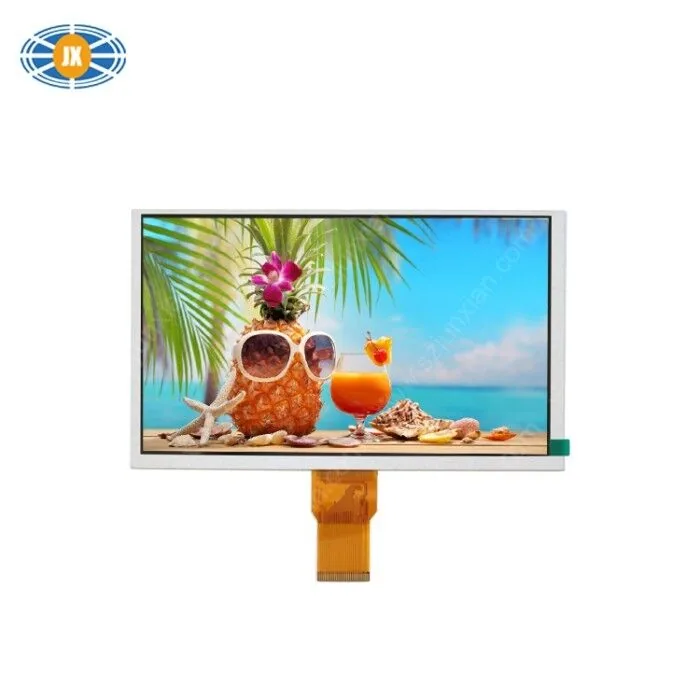
9 Inch TFT Display 1024x600 Touch Screen LCD Monitor For Industrial /
JM-PT144-00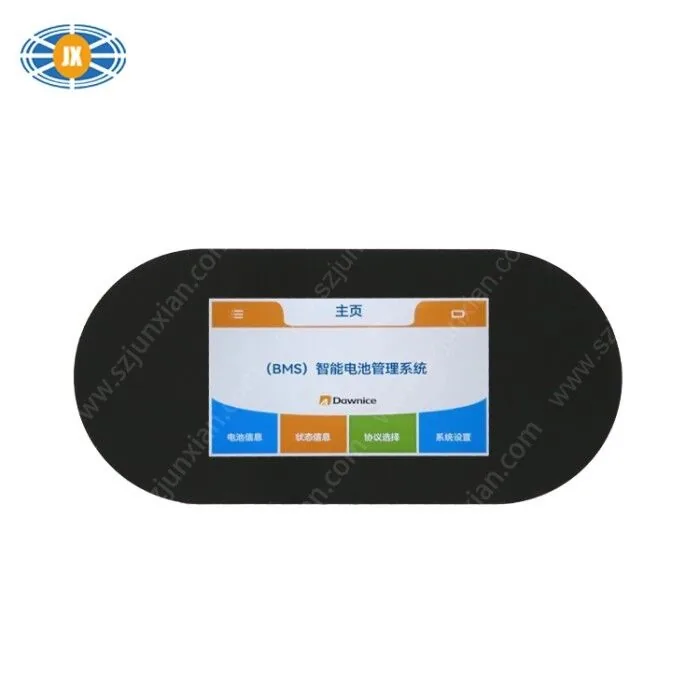
4.3 Inch BMS Serial Port Capacitive LCD Touch Screen 5V Full View Clea
JM-LH018-00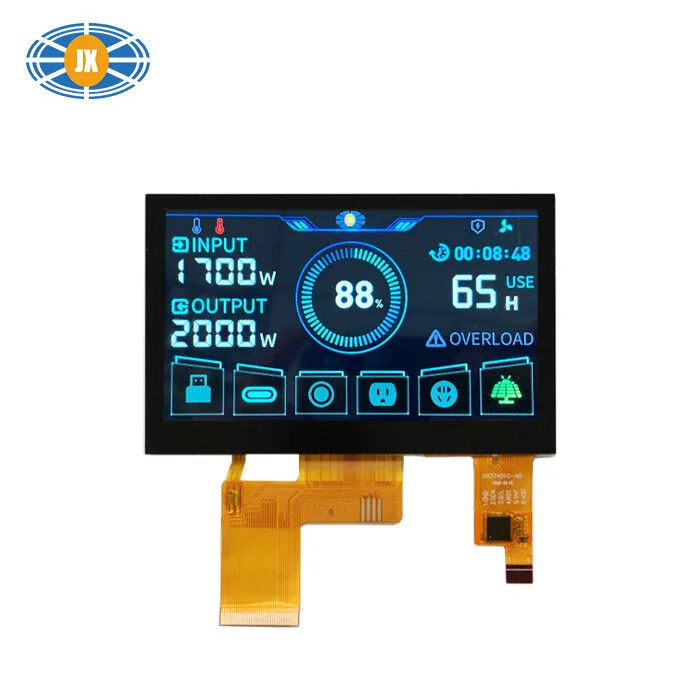
Customized TFT LCD Touch Screen 8 Bit RGB Interface 4.3 inch Capacitiv
JM-PT105-01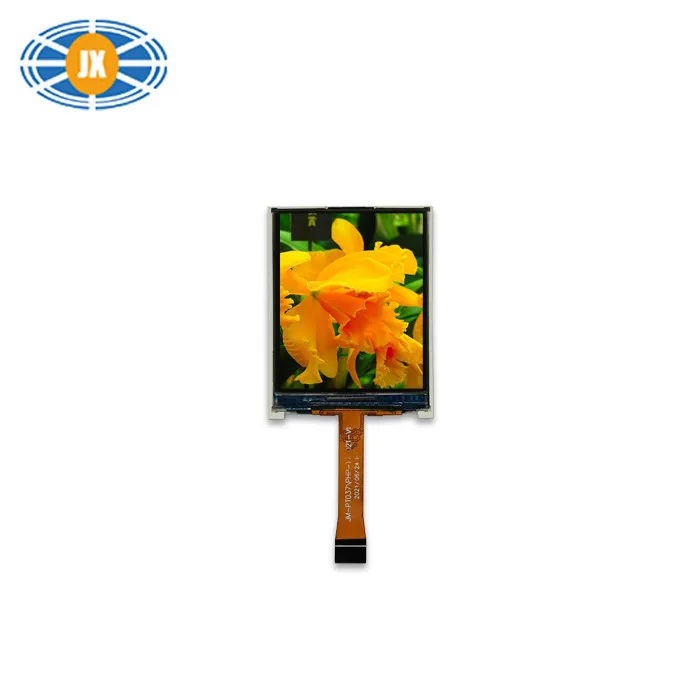
1.77 Inch TFT LCD Display 4 Bit 128×160 Pixels Color TFT Display SPI I
JM-PT037Related guides
Capacitive or Resistive Touch, Air Bonding or Optical Bonding
Capacitive touch wins on feel, multi-touch and durability, and it is what most buyers now specify by default. Resistive still beat...
How a Custom LCD Module Is Developed, Step by Step
Most 'custom' display projects are not custom glass at all - they are an existing panel with a different FPC, connector, backlight...
TN, IPS, VA and STN: Which Glass Mode Should You Specify?
Glass mode decides how the display looks from where the operator actually stands. IPS holds colour and contrast off-axis and is th...
Questions engineers ask us about this
Can I add anti-glare to an existing panel I already ordered?
Yes - cover glass and surface treatment are changed independently of the panel underneath, so this is one of the more common modification requests on a repeat order.
Does anti-glare reduce touch sensitivity?
No - the treatment is on the outer surface of the cover glass, above the touch sensor layer, and does not affect capacitive or resistive touch performance.
What is the minimum order for a custom cover glass?
Cover glass changes are usually within our custom tooling tier - 1,000 pcs - though a treatment or printing change on an existing outline can sometimes be quoted lower. Send the specification and we will confirm.
Can you colour-match a bezel to our brand colour?
Yes - send a Pantone reference or a physical sample and we will confirm the closest achievable match before tooling.
Need a quote or a datasheet?
Send us size, resolution, interface and annual quantity. Our engineers reply within one working day. Sample MOQ 5 pcs, lead time 10-20 days.