
What Is an IPS Display? IPS LCD Modules Explained for Engineers
IPS - in-plane switching - is a way of arranging the liquid crystal in a TFT LCD so the picture barely changes when you look at it from the side. It is why modern panels hold their colour and contrast across a wide viewing cone, and it is the default we recommend for any display the operator does not face straight on. It is not a different kind of display from TFT: an IPS panel is a TFT panel with IPS liquid crystal on top.
Written by the Junxian applications engineering team. Figures quoted for “our models” are calculated from the 103 models on this site that carry a full parameter set, so they change when the catalogue changes.
What IPS actually means
Each sub-pixel of an LCD is a small cell of liquid crystal between two polarisers. The voltage across the cell turns the crystal and changes how much backlight gets through. In a TN (twisted nematic) cell the crystal is twisted between the two glass plates and tilts up out of the plane of the glass when it is switched. In an IPS cell the electrodes sit side by side on one substrate and turn the crystal within the plane of the glass. Because the molecules stay parallel to the glass, the light path changes much less as your eye moves off-axis - so colour and contrast stay stable across a wide cone.
IPS vs TFT: why that comparison misleads
TFT - thin-film transistor - describes the backplane: one transistor per sub-pixel that holds its charge between refreshes. That is what makes an active-matrix colour LCD possible, and almost every colour LCD module is a TFT. IPS describes the liquid crystal mode on top of that backplane. So 'TFT vs IPS' compares a layer with the layer above it; the real choice is IPS against TN or VA. When a module listing says only 'TFT', it is often a TN panel - check the glass-mode line of the specification. On our product pages the display type is its own row for exactly this reason.
What IPS changes, in terms you can specify
Viewing angle. IPS panels are typically specified at or near 80 degrees in all four directions (at a contrast ratio of 10:1). TN panels are commonly specified narrower and unevenly, with one weak direction - usually from below. Colour and grey levels off-axis. IPS keeps them stable; TN shows grey levels inverting when viewed from its weak side, which is what makes a TN screen look 'negative' from the wrong angle. Contrast. IPS typically sits in the high hundreds to around 1,000:1 in a dark room; VA goes higher, TN lower. Normally black. An undriven IPS cell blocks light, so the screen is black at power-up with the backlight on; TN is usually normally white.
What IPS costs
IPS glass costs more than TN glass of the same size and resolution, and an IPS cell passes a little less of the backlight, so reaching a given brightness can take slightly more backlight power. Response is slower than TN but comfortably fast enough for an HMI, a gauge or a menu. None of this is a reason to avoid IPS where the viewing angle varies; it is a reason not to pay for it on a fixed console that the user always faces head-on.
When to specify IPS - and when TN is the honest choice
Specify IPS when the operator reads the display from different positions: a machine panel read while standing beside it, a handheld tilted in the hand, a wall unit seen from across a room, or a round or square display where there is no single 'correct' viewing direction. TN remains a sound engineering choice for a fixed console viewed head-on, for cost-driven products and where the fastest response matters. Our TN vs IPS vs VA guide goes through the trade-offs mode by mode.
IPS and TN across our own catalogue
Generic comparisons only go so far - here is the glass-mode mix of the models published on this site, by size.
| Glass mode | Models | Sizes on our catalogue | What it is for |
|---|---|---|---|
| IPS | 47 | 0.96" - 10.1" | Colour stays stable when the panel is read from an angle. Our default for anything an operator does not look at straight on. |
| TN | 19 | 1.77" - 7" | Cheapest colour glass, narrower usable viewing cone, fastest response. Fine when the viewer sits in front of the screen. |
| FSTN | 7 | 2" - 3.2" | Monochrome with film compensation - higher contrast and a neutral background than plain STN. Used on our COG graphic modules. |
| STN | 20 | 2" - 5.7" | Monochrome workhorse: low power, low cost, blue or yellow-green background. Character and COG modules. |
Read from the display type field of each published model. Some models are listed as a combination (IPS/TN, STN/FSTN) because the same glass is offered both ways - those are counted under each mode they support.
IPS modules published on this site
Published models that illustrate the point above - full specifications on each page.
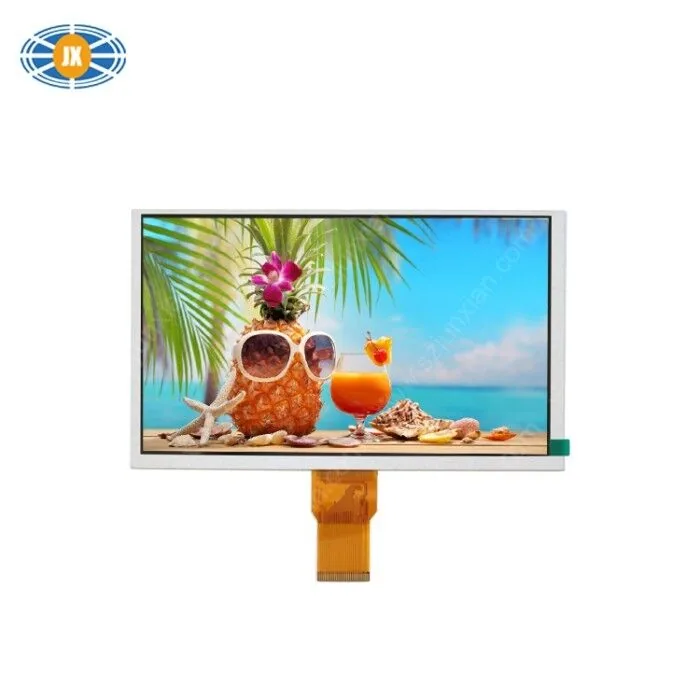
9 Inch TFT Display 1024x600 Touch Screen LCD Monitor For Industrial /
JM-PT144-00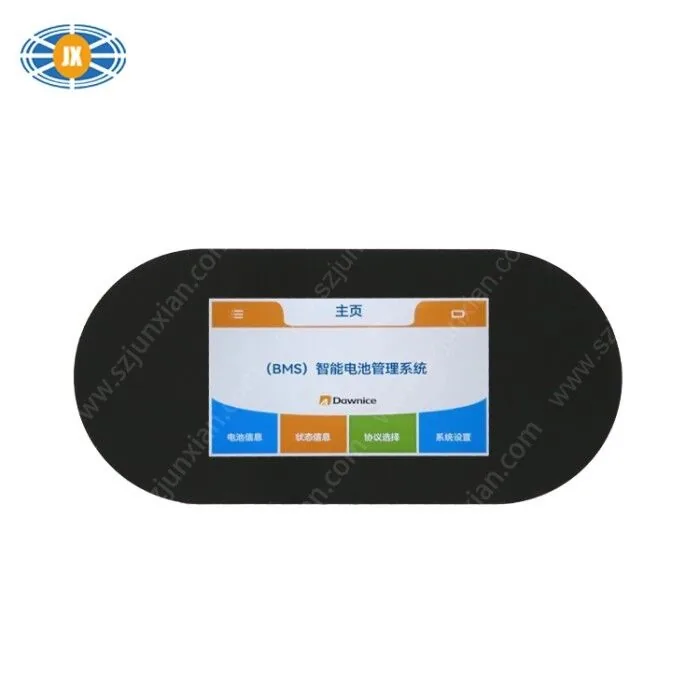
4.3 Inch BMS Serial Port Capacitive LCD Touch Screen 5V Full View Clea
JM-LH018-00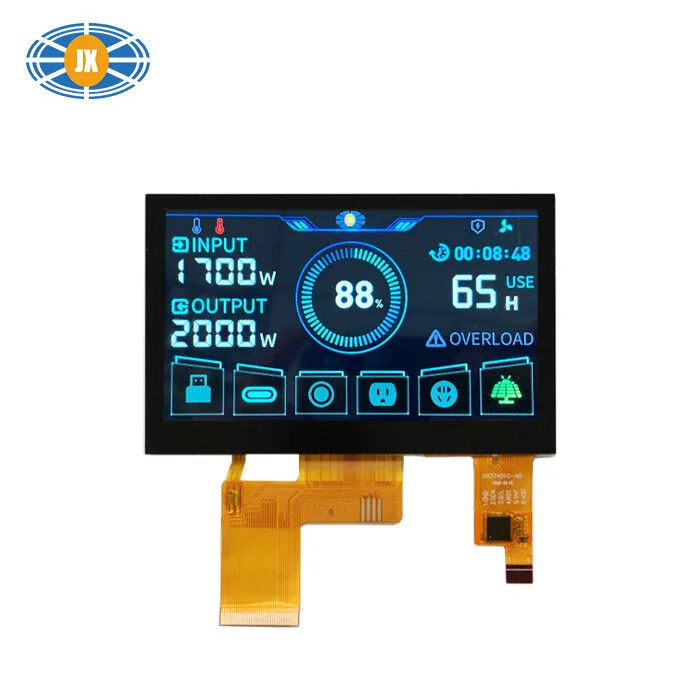
Customized TFT LCD Touch Screen 8 Bit RGB Interface 4.3 inch Capacitiv
JM-PT105-01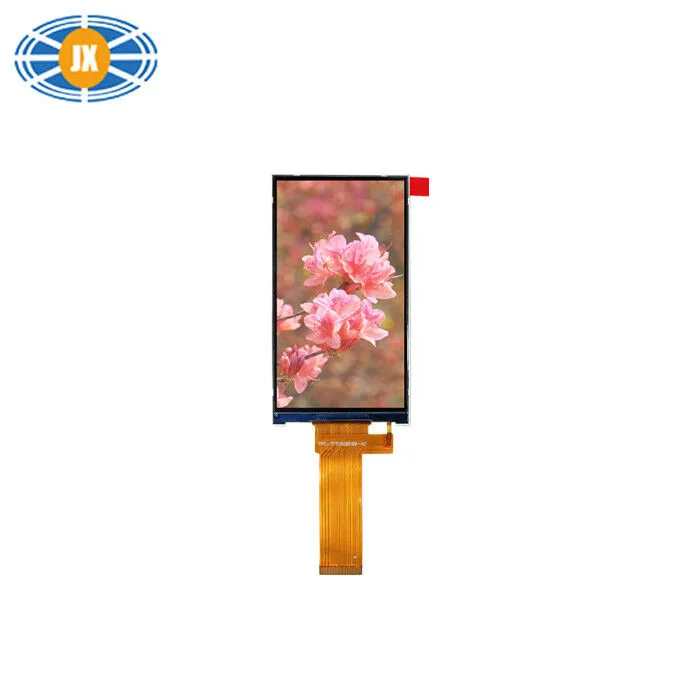
300cd/m2 5 Inch TFT LCD Monitor , IPS LCD Display Module 480x854 Pixel
JM-PT128-00Related guides
TN, IPS, VA and STN: Which Glass Mode Should You Specify?
Glass mode decides how the display looks from where the operator actually stands. IPS holds colour and contrast off-axis and is th...
How Many Nits Does a Sunlight-Readable Display Need?
Short answer: 200-300 cd/m² indoors, 350-450 cd/m² for shaded outdoor or a window-lit factory, and 500 cd/m² or more - or a transf...
LCD Image Sticking, Pressure Marks and Mura: Causes and Prevention
Three complaints reach display suppliers more than any others once a product is in the field: a faint ghost of an old screen that ...
Questions engineers ask us about this
Is an IPS display the same as a TFT display?
An IPS display is a TFT display - IPS is the liquid crystal mode, TFT is the transistor backplane under it. The comparison that matters is IPS against TN or VA.
Is IPS better than TN in sunlight?
For viewing angle, yes; for sunlight readability, not by itself. Readability in bright light comes from brightness, surface treatment and bonding - see our sunlight-readable guide. An IPS panel is not more readable in direct sun than a TN panel of the same brightness.
Do IPS panels suffer from burn-in?
Not in the OLED sense. An LCD can show temporary image retention if a static image is held for a long time, especially when warm, but it is recoverable and can be designed out - see our image sticking guide.
Why does my IPS screen ripple when I press it?
Pressing the glass changes the liquid crystal gap locally, and IPS panels show it as a visible ripple. It is harmless if brief, but it is a sign the display needs a cover lens or touch panel in front if users can reach it.
Can I get an IPS version of a TN module I already use?
Sometimes at the same size and resolution, though the outline, FPC or driver IC may differ. Send the model number and we will say whether a compatible IPS glass exists before you change the mechanical design.
Need a quote or a datasheet?
Send us size, resolution, interface and annual quantity. Our engineers reply within one working day. Sample MOQ 5 pcs, lead time 10-20 days.